Dublin Heatwave July 2026: How City Is Coping
Dublin records 29°C as emergency services log 34% spike in heat calls. How the city compares to Madrid and Amsterdam's decade-old heat action plans.
Dublin records 29°C as emergency services log 34% spike in heat calls. How the city compares to Madrid and Amsterdam's decade-old heat action plans.
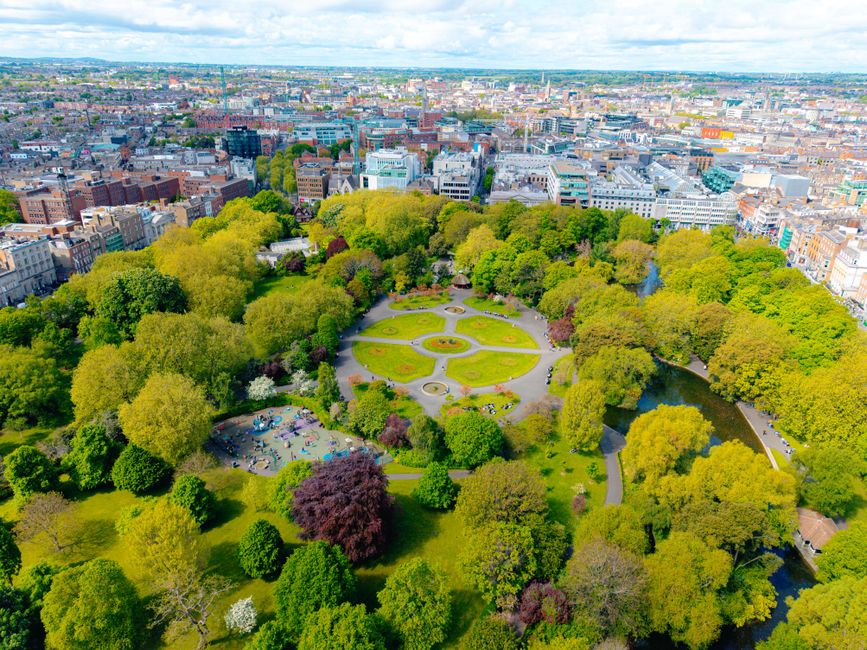
Dublin recorded temperatures touching 29°C at Phoenix Park on Wednesday, the third consecutive day above 27°C and the kind of sustained heat the city's infrastructure was simply not designed to handle. While France buried more than 2,000 people attributable to this month's heatwave peak, Dublin's own emergency services logged a 34 percent spike in heat-related 999 calls over the 48-hour period ending Thursday morning, according to figures from the Dublin City Council emergency management desk.
The timing matters. July 2026 is shaping up as the hottest on record across western Europe, and the contrast between how Dublin is responding versus cities that built heat-action plans a decade ago is becoming impossible to ignore. Madrid activated its Plan de Acción ante Altas Temperaturas — a tiered public health alert system — within six hours of its first red warning. Amsterdam opened 23 designated cooling centres coordinated through its municipal GGD health service. Dublin is still working from guidance documents drafted in 2019.
Dublin City Council opened three "cool spaces" on Thursday, directing residents to the Central Library on Ilac Centre in Moore Street, the Civic Offices at Wood Quay, and the SEAI-funded community hub on Parnell Square East. The locations are adequate for the city centre but leave suburbs like Clondalkin, Ballymun and Tallaght — where older housing stock and higher social deprivation make heat risk far greater — with no designated refuge point within a reasonable distance.
Irish Water issued a conservation notice covering the Greater Dublin Area on Wednesday afternoon, asking residents to avoid garden irrigation and car washing between 7am and 7pm. Demand on the Vartry Reservoir system, which supplies much of north Dublin, hit 98 percent of operational capacity by Wednesday evening. The same system was at 71 percent capacity during the same week last year.
Transport infrastructure is creaking too. Dublin Bus reported speed restrictions on 12 routes where road surface temperatures exceeded safe operating thresholds. The Luas Cross City line capped carriage temperatures using emergency ventilation protocols, though passengers on the Red Line between Tallaght and The Point reported carriages hitting 36°C internally during the afternoon peak. Compared to Vienna's U-Bahn, which retrofitted air conditioning across its full fleet between 2018 and 2023 at a cost of €340 million, the Luas fleet's partial ventilation fix looks like a short-term patch on a long-term problem.
There is no real-time public dashboard tracking heat vulnerability in Dublin the way Lisbon's Sistema de Vigilância em Saúde Pública does — a platform the Portuguese capital built after its catastrophic 2003 summer, which killed more than 1,900 people nationally. Dublin's public health infrastructure, overseen by the HSE's Health Protection Surveillance Centre on Baggot Street, publishes weekly rather than daily heat-health data during emergencies, a lag that public health advocates have criticised for years.
The Irish Meteorological Service, Met Éireann, has forecast temperatures staying above 25°C through at least Sunday, with humidity rising from Saturday onward. That combination — high temperatures plus humidity — is medically more dangerous than dry heat alone, raising the risk of heat exhaustion particularly for people over 65 and those with cardiovascular conditions.
Residents in exposed areas should check on elderly neighbours and avoid non-essential travel during the 12pm to 5pm window on Friday and Saturday. The HSE's GP out-of-hours service, SouthDoc, extended its Dublin region operating hours through the weekend. Anyone needing the three designated cool spaces should note that the Parnell Square East community hub closes at 8pm while the Ilac Library location stays open until 10pm. Dublin City Council says it will review whether additional sites are needed by Friday evening, with Dún Laoghaire-Rathdown County Council considering opening Marlay Park's visitor centre as an additional refuge point this weekend.
This article was compiled by AI and screened before publishing. See our editorial standards.
How does this story make you feel?
Spread the word
About this article
Published by The Daily Dublin
Daily brief
Free, in your inbox before 7am. Weekdays.
More in News