Dublin's Office Market Splits: Vacancy Climbs While Rents Hold Firm
Vacancy rates are climbing in some postcodes while rents hold firm in others — here's how to read the signals.
Vacancy rates are climbing in some postcodes while rents hold firm in others — here's how to read the signals.
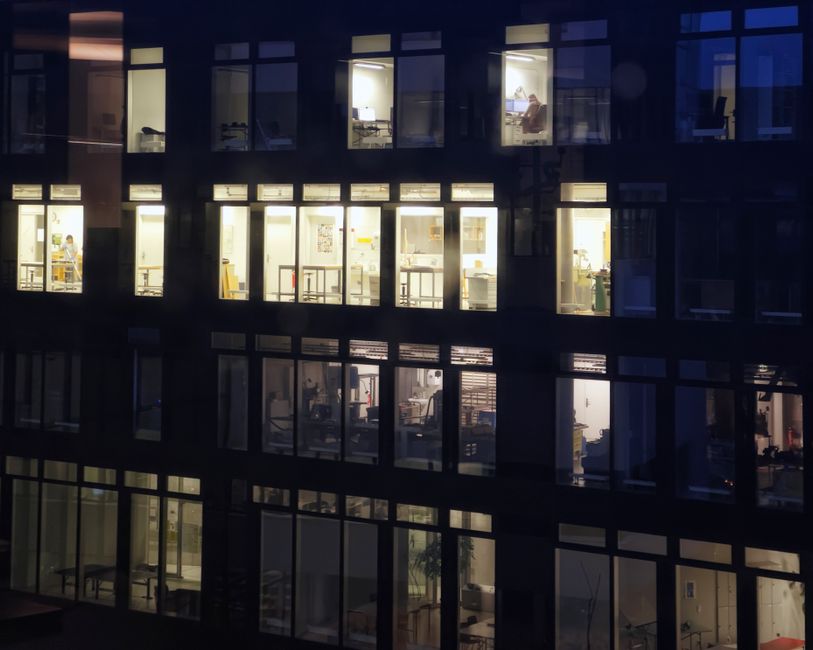
Dublin's office market is splitting in two. Prime Grade A space along the Grand Canal Dock corridor and in the north docklands is holding rental values close to €62 per square foot per annum, while secondary stock in older mid-city blocks — particularly around Parnell Street and the western fringes of the central business district — is sitting empty in volumes not seen since 2013. The divergence is the defining commercial property story of mid-2026, and investors are pricing it in fast.
The timing matters for a specific reason. Several large American technology companies that anchored Dublin's office boom between 2015 and 2022 are still sitting on lease obligations for buildings they are no longer fully occupying. Those leases, many signed for ten-year terms, are now approaching break-clause windows. What happens when those clauses are exercised — or not — will determine whether the vacancy rate, currently running at approximately 14.7 percent across the city according to figures compiled by CBRE Ireland for Q1 2026, tightens or widens further before the end of the year.
Not every corner of Dublin is struggling. Barclays expanded its Molesworth Street footprint in May, taking an additional floor in a move that caught several agents off guard given the broader mood of corporate caution. The ESB's continuing presence at Fitzwilliam Street Lower, alongside a cluster of regulated financial firms occupying refurbished Georgian stock along Merrion Square, suggests that certain categories of occupier — financial services, legal, regulated tech — still want a central Dublin address and are prepared to pay for one.
The docklands remains the primary draw for institutional capital. Hibernia REIT's legacy portfolio in the area, now under Brookfield Asset Management following the 2022 acquisition, has maintained high occupancy at flagship assets like One Dockland Central on Guild Street. Rents there have not moved dramatically downward despite the headline vacancy numbers, which tells you something about the quality stratification happening across the market. Landlords with new, highly energy-efficient buildings compliant with the EU's updated Energy Performance of Buildings Directive can still attract occupiers. Owners of older, poorly rated stock are under genuine pressure.
Co-working operators have filled some of the gap. Iconic Offices, which operates multiple Dublin locations including sites on Harcourt Street and on Pembroke Street Upper, reported occupancy above 85 percent through Q2 2026, according to figures shared with industry body SCSI. That figure reflects a structural shift rather than a cyclical blip: companies are taking flexible licences rather than long leases, hedging against uncertainty about how many days per week their staff will actually come in.
The cross-border investment picture is more nuanced than the vacancy headline suggests. Total commercial property investment in Ireland reached approximately €1.4 billion in the first half of 2026, down around 18 percent on the same period in 2025, but deal flow has not collapsed. German open-ended funds, which pulled back sharply in 2023 and 2024 amid rising interest rates, have started returning to the Dublin market on a selective basis, drawn by yield compression that now makes some assets look attractive relative to Frankfurt or Amsterdam equivalents.
IDA Ireland's pipeline is relevant here too. The agency secured 29 investment decisions in the first quarter of 2026, a figure that may translate into office demand with an 18-to-24 month lag. That lag is standard in corporate fit-out planning cycles, which means decisions being made in boardrooms in Boston and Singapore right now will show up in Dublin lease signings sometime around late 2027.
For occupiers renewing leases or considering moves before the end of 2026, the leverage is real but concentrated. Landlords with older buildings rated below a BER C are willing to negotiate hard on headline rent and fit-out contributions. Those with LEED Platinum or equivalent accreditation in D2 or D4 postcodes are not. Any company signing above 10,000 square feet should be getting independent advice from a tenant-only agent, not a firm that also acts for the landlord on the same building — a conflict that remains more common in this market than it should be.
How does this story make you feel?
Spread the word
About this article
Published by The Daily Dublin
Daily brief
Free, in your inbox before 7am. Weekdays.
More in Business